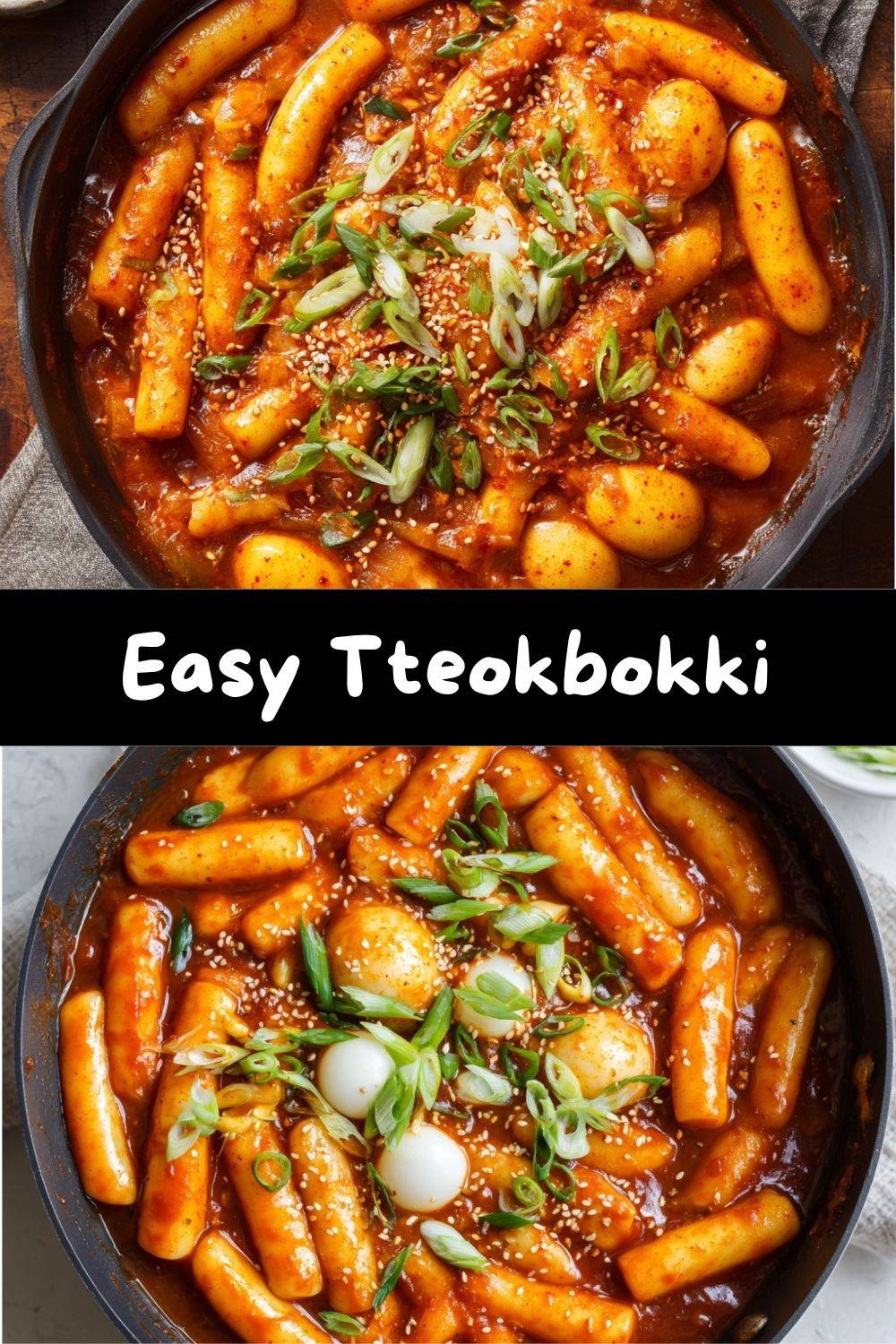
Easy Tteokbokki Recipe – Spicy Korean Rice Cakes in 20 Minutes
Hey there, friend! Let me tell you about the first time I met my food soulmate on a bustling street in Seoul. It wasn’t fancy. It wasn’t quiet. It was a steamy, glorious cloud of spice, chew, and pure joy served from a tiny cart. I’m talking about Tteokbokki (pronounced “tok-bow-key”), and from that first bite of a chewy rice cake coated in that addictive, sweet-and-fiery red sauce, I was a goner. Hooked. Completely, utterly obsessed.
Maybe you’ve seen those gorgeous, glossy videos of tteokbokki bubbling away, promising the ultimate comfort food experience. Or maybe this is your first time hearing about it! Wherever you are on your food journey, I’m here to tell you a secret: You absolutely can make this iconic Korean street food at home, and it’s shockingly easy. We’re talking 20 minutes, one pan, and a handful of ingredients that pack a universe of flavor.
This recipe is your ticket to a weeknight dinner that feels like an adventure, a snack that turns into a meal, and a big, warm, spicy hug in a bowl. So, tie on your apron (the messy one is the best one), and let’s bring the vibrant energy of a Seoul street food stall right into your kitchen. Get ready for chewy, comforting, and boldly delicious fun!
The Day I Fell in Love with a Rice Cake
My love story with tteokbokki starts with jet lag and a growling stomach. I’d just landed in Seoul, wide-eyed and overwhelmed, and the only phrase I’d mastered was “kamsahamnida” (thank you). Wandering through Myeongdong, a sensory overload of neon lights and incredible smells, I saw it: a vendor surrounded by a happy crowd, all holding little paper cups filled with bright red sticks.
I pointed, smiled, and handed over some won. What I got back was a steaming cup of pure magic. The first bite was a revelation—the chew of the rice cake, a texture I’d never experienced, followed by a wave of spicy, sweet, and savory sauce that made my taste buds sing. It was warming from the inside out. I stood there on that busy street, completely oblivious to the crowd, in my own little world of spicy bliss. It was comfort food, but not like my grandma’s cinnamon rolls. This was electric comfort. It was the moment I realized that some of the best food in the world doesn’t need a tablecloth—just a hungry heart and an open mind.
Gathering Your Flavor Party: The Ingredients
Here’s the beautiful part—the ingredient list is short and mighty. Each one plays a starring role. You can find most of these at a well-stocked Asian grocery store or even in the international aisle of many supermarkets.
- 1 lb (450g) Korean Rice Cakes (Tteok): The heart of the dish! These are chewy, cylinder-shaped cakes made from glutinous rice flour. You’ll find them fresh, frozen, or vacuum-sealed. Chef’s Insight: If they’re hard, don’t panic! A quick soak in warm water softens them right up. For a fun twist, look for “mini” rice cakes or even the flat, oval ones.
- 2 cups Water: This forms the base of our simple, speedy sauce. Using broth (vegetable or anchovy-kelp broth for authenticity) adds a deeper layer of flavor, but water works perfectly in a pinch!
- 2 tbsp Gochujang (Korean Chili Paste): The flavor MVP! This fermented red chili paste is complex—spicy, sweet, savory, and umami-packed all at once. Substitution Tip: There’s no perfect 1:1 swap, but in a true emergency, mix together 1.5 tbsp miso paste + 1/2 tbsp sriracha + a pinch of sugar for a vaguely similar savory-spicy kick.
- 1 tbsp Soy Sauce: Our salty, umami anchor. Use regular or low-sodium. For a gluten-free version, tamari is a great friend here.
- 1 tbsp Sugar: The essential counterpoint to the spice and salt. It creates that iconic sweet-spicy balance. Brown sugar or honey also works beautifully.
- 1 tsp Gochugaru (Korean Chili Flakes, optional): This is for my spice-lovers! Gochugaru adds a brighter, fruitier heat than just the paste. Chef’s Insight: If you can’t find it, a pinch of crushed red pepper will do, but the flavor profile will shift slightly.
- 2 Garlic Cloves, minced: Because what’s a good sauce without garlic? Fresh is best here—it mellows and sweetens as it simmers.
- 1 Green Onion, chopped (plus more for garnish): Adds a fresh, sharp bite. We’ll cook some in for flavor and save the vibrant green parts for a fresh finish.
- Optional Add-ins: This is your playground! Classic choices are fish cakes (odeng), a halved boiled egg, or shredded cabbage. But my favorite modern twist? A slice of melty mozzarella cheese on top. Trust me.
Let’s Get Cooking: Your Foolproof Steps to Tteokbokki Bliss
Ready? This is where the magic happens, and it’s so satisfying to watch. Have all your ingredients prepped and nearby—this goes fast!
- Prep Your Rice Cakes: If your rice cakes are fresh and soft, you can skip this step. If they’re firm (most frozen or packaged ones are), place them in a large bowl and cover with warm water. Let them soak for 10-15 minutes while you prepare the sauce. This ensures they cook evenly and get that perfect, tender-chewy texture. Chef’s Hack: No time to soak? You can add them directly to the simmering sauce, but you may need to add a splash more water and cook for a few extra minutes.
- Build Your Flavor Base: Grab a large skillet or wide pan (non-stick is great here). Add the water, gochujang, soy sauce, sugar, optional gochugaru, and minced garlic. Whisk it all together over medium-high heat until the gochujang is completely dissolved and the mixture is smooth. Chef’s Commentary: Give it a taste! This is your moment to adjust. Want it sweeter? Add a pinch more sugar. More savory? A dash more soy sauce. Remember, the spice will mellow a bit as it cooks.
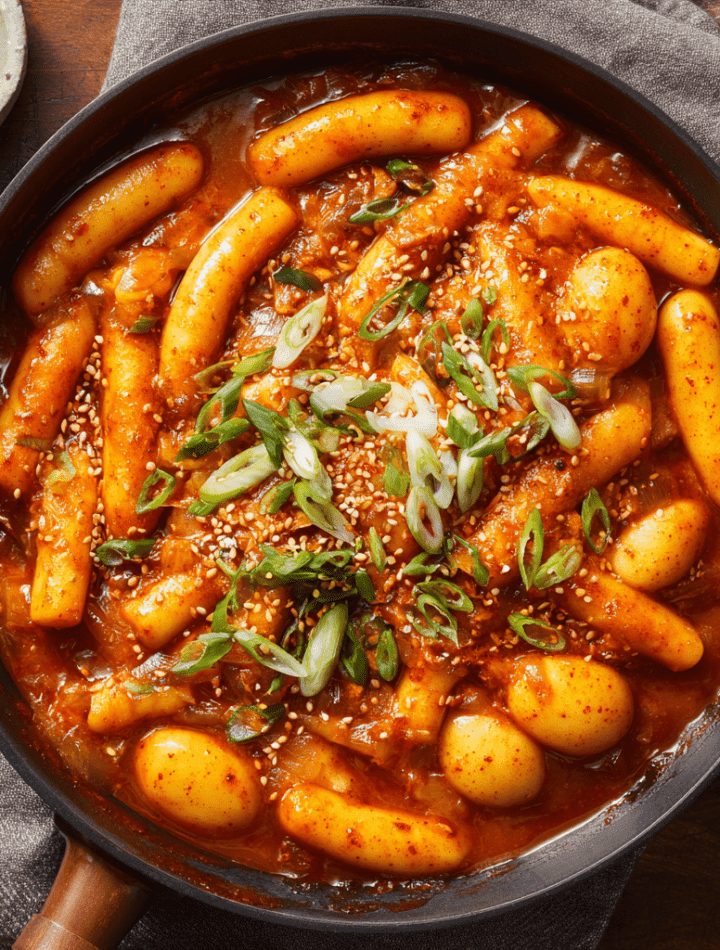
- The Simmer & Thicken: Bring your gorgeous red sauce to a lively simmer. Drain your rice cakes and add them to the pan, along with the chopped white and light green parts of your green onion. Give everything a gentle stir to coat the rice cakes. Reduce the heat to medium and let it bubble away for 10-15 minutes. Don’t walk away! The magic is in the reduction. Stir occasionally as the sauce thickens, becomes glossy, and lovingly coats each rice cake.
- Add Your Extras: In the last 3-5 minutes of cooking, add any quick-cooking extras like fish cakes or cabbage. If you’re adding a pre-boiled egg, nestle it in now just to heat it through and let it soak up some sauce. Chef’s Tip: The sauce should be thick enough to coat the back of a spoon. If it reduces too much before your rice cakes are tender, just add a splash more water.
- The Grand Finale: Once the rice cakes are soft with a delightful chew and the sauce is beautifully thickened, take the pan off the heat. It’s time to serve! For the cheese lovers, place a slice of mozzarella on top of the hot tteokbokki right in the pan or on each serving bowl—it will get wonderfully gooey.
Serving Your Masterpiece: How to Chow Down
Presentation is part of the fun! I love serving tteokbokki family-style, right in the skillet (with a trivet, of course!). The vibrant red sauce and chewy cakes are a feast for the eyes.
Garnish generously with the reserved green onion slices and a sprinkle of sesame seeds for a little toasty crunch. For a pop of color and a hint of freshness, a few strips of roasted seaweed (gim) on the side are perfect.
While it’s fantastic as a standalone meal, turning it into a Korean-inspired feast is a blast. Serve it alongside some store-bought kimchi for a tangy, crunchy contrast, and a simple cucumber salad to cool the palate. Need something more substantial? A bowl of fluffy white rice is the ultimate partner for soaking up any extra sauce. And trust me on this—a cold, crisp lager or a sparkling water with lemon is the perfect drink to cut through the spice.
Make It Your Own: Tasty Twists & Swaps
Once you’ve mastered the classic, the kitchen is your playground! Here are some of my favorite ways to riff on this recipe:
- Cheese Tteokbokki (Cheese-bokki): The ultimate indulgence. Right before serving, top the hot tteokbokki with a handful of shredded mozzarella or a few slices of American cheese. Cover for a minute to let it melt into a glorious, stretchy blanket. It’s spicy, cheesy, and absurdly good.
- Seafood Party: Add a mix of shrimp, mussels, and squid in the last 5 minutes of cooking. The seafood broth that forms takes the sauce to a whole new level of deliciousness.
- Vegan/Veggie-Loaded: Skip the fish cakes and use vegetable broth. Load up the pan with sliced mushrooms, carrots, bell peppers, and zucchini along with the rice cakes. The veggies release their own sweetness and make it a super hearty meal.
- Creamy Rose Tteokbokki: For a less spicy, rich version, stir in ¼ cup of heavy cream or milk and 1 tablespoon of tomato paste to the sauce base. It creates a beautiful pink, creamy, and incredibly comforting dish.
- Sweet & Sour (Jjajan-bokki): Swap the gochujang sauce for a black bean sauce! Use 2-3 tablespoons of Korean chunjang (black bean paste) instead of gochujang, and skip the gochugaru. It’s a totally different, but equally addictive, flavor profile.
Chef Emily’s Kitchen Notes
This recipe has become my go-to when I need a quick flavor fix or when friends come over for a casual, interactive meal. Over the years, I’ve learned a few things: First, the brand of gochujang matters—they all have slightly different spice and sweetness levels, so get to know your favorite. Second, I once made the mistake of not soaking *really* hard rice cakes. Let’s just say we were chewing for a while! Now I always soak. And third, the best tteokbokki is often the messiest to eat. Embrace the splash of red sauce on your shirt; it’s a badge of honor. I love that this dish is so adaptable—from the classic street version to my cheesy, over-the-top creation, it’s all about sharing bold, joyful food.
Your Questions, Answered!
Q: My rice cakes are still hard in the middle after cooking. What happened?
A: This usually means they needed a longer soak or a longer simmer. If they’re still firm, just add a splash more water to the pan and continue simmering, covered, for another 5-10 minutes, until they reach your desired chew.
Q: It’s too spicy for me! How can I fix it?
A: No worries! You can tame the heat by adding a bit more sugar or a drizzle of honey. A splash of milk or cream (like in the Rose variation) will also mellow it out beautifully. Next time, use less gochujang or choose a milder brand.
Q: Can I make this ahead of time?
A: You can prep the sauce mixture and soak the rice cakes ahead, but I highly recommend cooking it just before serving. Leftover tteokbokki rice cakes tend to harden in the fridge as the sauce is absorbed. If you do have leftovers, reheat them gently in a pan with a little added water to bring back the saucy texture.
Q: Where do I find these ingredients?
A: Most major grocery stores now carry gochujang in the international aisle. For the rice cakes and other specific items, your local Korean or pan-Asian market is a treasure trove. Online retailers like Amazon or Weee! are also fantastic resources.
Nutritional Info (A Quick Note!)
As a chef, I believe in balance and enjoying food without overcomplicating things! This nutritional breakdown is for the basic recipe (without add-ins) and is per serving (recipe serves 3). Tteokbokki is a carb-forward, satisfying dish thanks to the rice cakes. It’s naturally low in fat. The protein content comes mostly from the gochujang (fermented foods have small amounts). To boost the protein and make it a more rounded meal, I highly recommend adding those eggs, fish cakes, or a side of edamame. Remember, this is about joyful, flavorful eating—it’s a perfect part of a varied diet.
Per Serving (approx): Calories: 320 | Fat: 2g | Carbs: 65g | Sugar: 9g | Protein: 5g
Final Thoughts from My Kitchen to Yours
And there you have it! From a busy Seoul street corner to your very own stove, you’ve just unlocked the secret to one of the world’s most beloved comfort foods. I hope this recipe brings as much fun and flavor to your kitchen as it has to mine. The beauty of cooking is in the sharing, the experimenting, and the pure enjoyment of a meal made with your own two hands.
Did you try adding cheese? Throw in some shrimp? I want to hear all about it! Tag me on social or leave a comment below—seeing your creations is my favorite part of the day. Now, go forth, simmer that glorious red sauce, and experience the chewy, spicy, soul-warming magic of homemade tteokbokki. Happy cooking, friends!