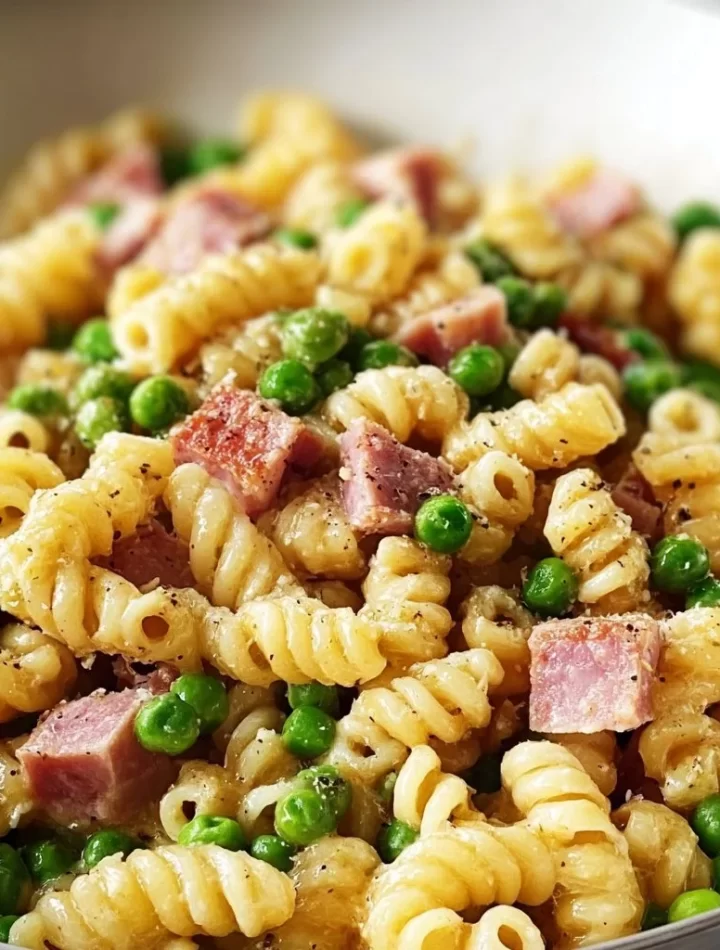
Pasta with Peas and Ham — Simple, Cozy, and Totally Cheerful
Hey there—I’m Emily Walker, your messy-apron-wearing, flavor-chasing friend from Tasty Chow. If you’ve ever wanted one of those dinners that feels like a warm hug, lands on the table in under 30 minutes, and gets everyone asking for seconds, this Pasta with Peas and Ham is your new go-to. Think creamy sauce, pops of bright green peas, salty-sweet ham, and pasta that carries all those flavors right to your fork. It’s comfort food without the fuss, and you’ll love how flexible it is for weeknights, lunches, or a lazy weekend dinner.
This recipe is one of those reliable, love-it-or-love-it-more dishes that demonstrates how a few pantry staples can become something extraordinary. It’s quick enough for busy evenings, but cozy enough for the kind of slow dinner where you linger at the table and talk about everything and nothing. The best part? Most of the ingredients are likely already in your fridge or pantry—shortcuts for the win.
If you’re the kind of cook who likes to riff and swap things in and out (guilty as charged), you’ll find plenty of room to play with this. I’ll show you how to make the classic version and then give you fun twists—think lemony brightness, a little spice, or a vegetarian swap that still feels hearty. And if you need more weeknight inspiration, I’ve pulled together a little collection of my favorite quick pasta recipes you can browse for ideas: my weeknight pasta recipes.
In this post I’ll share a nostalgic little story about how this dish earned a permanent spot in my recipe rotation, walk you through every ingredient with chef tips and substitutions, and lay out step-by-step instructions so even new cooks can nail it. I’ll also include serving suggestions, variations, troubleshooting tips, and nutrition notes—everything you need to make this dish confidently and deliciously. Ready? Let’s make something delicious together.
A Little Kitchen Memory
This pasta takes me back to a small, sunlit kitchen where my grandma taught me that the best meals are the simplest. She wasn’t a fancy cook—her style was practical, generous, and full of heart. One rainy afternoon, she tossed together leftover ham, thawed peas, and a handful of pantry pasta with a splash of milk and a knob of butter. We ate it straight from the pot because who has time for plates when a pot is still warm and the smell is irresistible?
That cozy meal became a tradition—an easy dinner that felt special because of the company and the comfort. Years later, after culinary school and many experiments, I circled back and refined that memory into this recipe. I kept the simplicity, dialed up the seasoning, added a touch of cream for silkiness, and made sure there were enough tricks for busy cooks to rescue it from common pitfalls. It’s the kind of dish that reminds me good food doesn’t need to be complicated—just thoughtful.
Ingredients
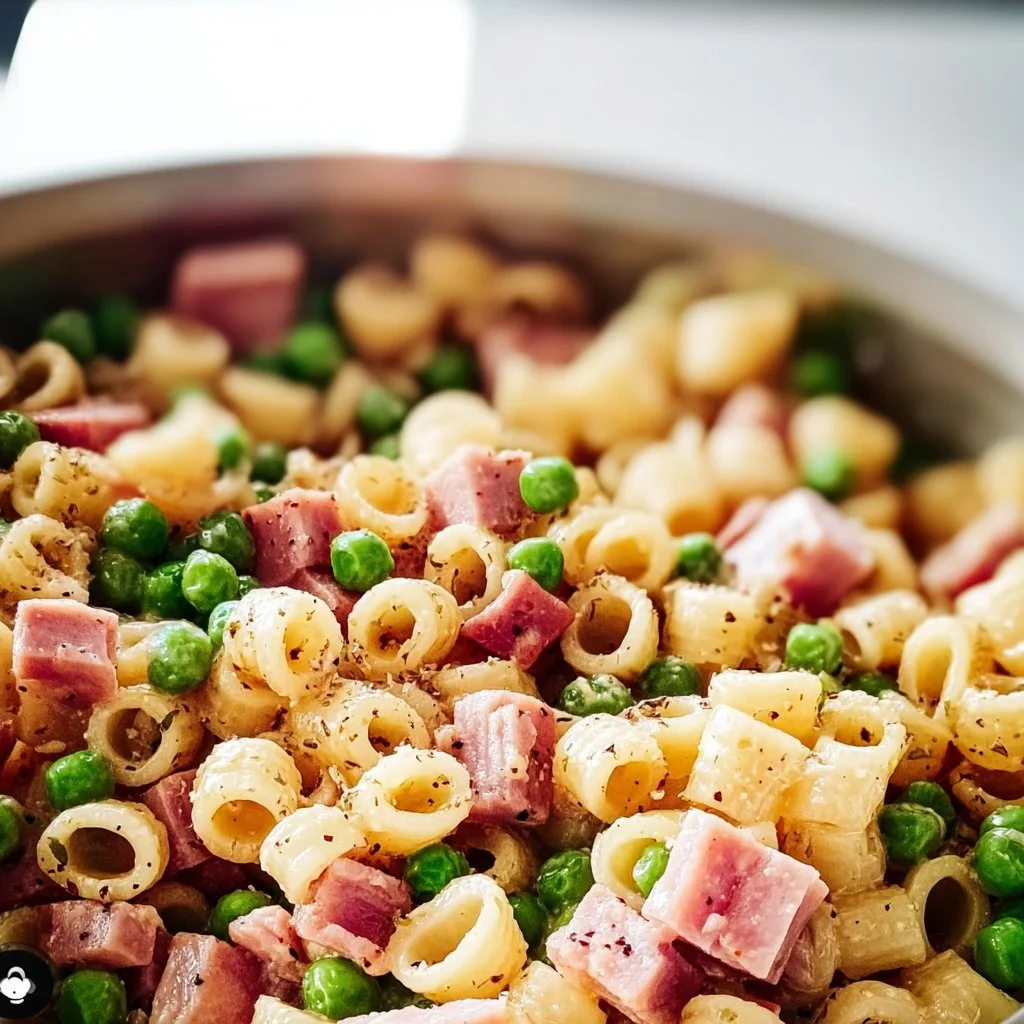
- 12 ounces pasta (penne, shells, or fusilli work best)
- Chef insight: Choose a short pasta with nooks to catch peas and ham. Gluten-free or whole-grain options work too—cook to package directions.
- 1 cup frozen peas, thawed
- Tip: Frozen peas are sweeter and more convenient than fresh; add them at the end so they stay bright and poppy.
- 8 ounces cooked ham, diced (about 1 1/2 cups)
- Substitution: Use leftover roast pork, pancetta for a punchier flavor, or smoked tofu for a vegetarian twist.
- 1 small onion, finely chopped
- Insight: Yellow or sweet onion adds savory depth; shallots give a softer, more delicate flavor.
- 2-3 cloves garlic, minced
- Tip: Garlic is a flavor anchor—mince finely and sauté just until fragrant to avoid bitterness.
- 2 tablespoons unsalted butter + 1 tablespoon olive oil
- Swap: Use all olive oil for a lighter dish, or finish with butter for extra creaminess.
- 1/2 cup dry white wine (optional)
- Chef tip: A splash of wine deglazes the pan and adds acidity; if you skip it, use an extra 1/4 cup chicken broth.
- 1 cup heavy cream or half-and-half
- Substitutions: Half-and-half makes a lighter sauce; for dairy-free, use full-fat coconut milk (flavor will change).
- 1/2 cup grated Parmesan cheese, plus extra for serving
- Tip: Freshly grated Parmesan melts beautifully—avoid pre-grated powders when possible.
- Zest of 1 lemon (optional but recommended)
- Insight: Lemon zest brightens the whole dish and makes the cream feel lighter.
- 1/4 to 1/2 teaspoon red pepper flakes (optional)
- For heat lovers: Start small and taste—a little goes a long way in a creamy sauce.
- Salt and black pepper to taste
- Note: Ham is salty, so season at the end to avoid over-salting.
- Fresh parsley or basil for garnish (optional)
- Chef tip: Herbs add freshness and color—toss most of them in at the end.
Step-by-Step Instructions (with chef hacks)
-
Bring a large pot of salted water to a rolling boil.
- Tip: Salt the water generously—about 1 tablespoon per 4-6 quarts—so the pasta is well seasoned from the inside out.
- Hack: Use the same pot for boiling pasta and to hold the sauce later if you’re short on pans—just transfer safely.
-
Cook the pasta until just shy of al dente (about 1–2 minutes less than package directions).
- Commentary: The pasta will finish cooking in the sauce, absorbing flavor. Reserve 1 cup of pasta cooking water before draining.
- Hack: Use a spider or tongs to lift a piece and test—perfect texture is slightly firm in the center with no chalky taste.
-
While pasta cooks, heat butter and olive oil in a large skillet over medium heat.
- Tip: The oil raises the butter’s smoking point so you get a nice sauté without burning the butter.
- Hack: If you want a nuttier flavor, brown the butter slightly before adding the onion—but watch closely.
-
Add the chopped onion and sauté until translucent and slightly golden, about 5–6 minutes.
- Commentary: Low and slow for onions builds savory depth. If you rush, you lose sweetness and complexity.
- Tip: A pinch of salt during cooking helps draw moisture out and speeds caramelization.
-
Stir in minced garlic and cook for about 30 seconds until fragrant.
- Hack: Add garlic late—burnt garlic tastes bitter. If using garlic powder as a fallback, add a pinch with the cream for subtle background flavor.
-
Add diced ham and sauté until edges begin to caramelize, 3–4 minutes.
- Insight: Browning the ham unlocks flavor. If using pancetta or bacon, render it first and remove excess fat if too greasy.
-
Deglaze the pan with the white wine (or chicken broth), scraping up fond from the bottom.
- Tip: Let the wine reduce by half—this concentrates flavor and cooks off alcohol. If skipping alcohol, a splash of apple cider vinegar can mimic acidity.
-
Pour in the cream and bring to a gentle simmer.
- Commentary: Keep it below a rolling boil to prevent the dairy from separating. Stir frequently.
- Hack: If the sauce seems thin, simmer a minute longer; if it gets too thick, thin with reserved pasta water, a tablespoon at a time.
-
Stir in the grated Parmesan and lemon zest; season with black pepper and red pepper flakes if using.
- Tip: Add salt sparingly now—taste first because ham adds saltiness. Freshly grated cheese melts smoother than pre-grated.
- Hack: For a silkier sauce, temper the Parmesan by stirring it into a small ladle of hot cream before mixing into the pan.
-
Add the drained pasta to the skillet and toss to combine, adding reserved pasta water as needed to create a glossy sauce that clings to the pasta.
- Commentary: The starch in the pasta water is gold—use it to bind the sauce without adding more cream.
- Hack: Work quickly and toss gently to avoid breaking pasta shapes.
-
Fold in the thawed peas and warm through for 1–2 minutes.
- Tip: Add peas at the end to keep their bright color and fresh flavor. Overcooking turns them mushy and dull.
-
Taste and adjust seasonings—add more pepper, a squeeze of lemon juice if you want brightness, or a sprinkle of extra cheese.
- Hack: If the sauce tastes flat, a tiny pinch of sugar balances acidity; a splash of vinegar or lemon juice brightens heavy cream sauces.
-
Serve immediately, garnished with chopped herbs and an extra shave of Parmesan.
- Commentary: This dish is best hot and fresh. Leftovers are great, but the texture and brightness soften after refrigeration.
Serving Suggestions
Pasta with Peas and Ham feels special but unpretentious, so plate it in ways that match the mood.
- Family-style: Toss the pasta in the skillet and serve it at the center of the table with a bowl of grated Parmesan and a lemon wedge. Everyone loves to customize their plate.
- Individual plates: Twirl forkfuls into shallow bowls for a restaurant-style presentation. Sprinkle with parsley, basil, and a light drizzle of extra virgin olive oil to finish.
- Add a crunch: For texture, top each serving with toasted breadcrumbs or chopped toasted almonds. A sprinkle of crispy pancetta or bacon on top gives a contrasting crunch and smoky flavor.
- Side pairings: Serve with a simple green salad dressed in lemon vinaigrette to cut through the creaminess, or crusty garlic bread for dipping. Roasted asparagus or a tray of sautéed spinach are great warm vegetable companions.
- Wine pairing: A crisp Pinot Grigio or a light Chardonnay pairs beautifully; the acidity cuts through the cream while complementing the ham’s saltiness.
- Make it a meal: Add a bright tomato and cucumber salad and some roasted root vegetables for a hearty family meal.
Keep the plating casual if you’re feeding a crowd—this dish shines most when people are relaxed and focused on good conversation.
Recipe Variations
One of my favorite parts of this dish is how many directions you can take it. Here are a few of my favorite variations:
- Lemon-Garlic Peas & Ham
- Brighten the sauce with extra lemon zest and a generous squeeze of lemon juice at the end. Add chopped parsley and finish with a little lemony olive oil drizzle.
- Creamy Mustard Twist
- Stir in 1 tablespoon Dijon mustard with the cream for a tangy depth that plays nicely with ham. Great for winter dinners.
- Spicy Tomato Cream
- Add 1/2 cup crushed tomatoes or tomato passata with the cream and a pinch of chili flakes for a rosé-style sauce. It’s colorful and comforting.
- Vegetarian Swap
- Replace ham with smoked tempeh or sautéed mushrooms and add a handful of toasted walnuts for a satisfying bite. Use vegetarian Parmesan or nutritional yeast if avoiding dairy.
- One-Pan Dinner
- Sauté diced potatoes with the onion until tender, add the pasta and extra broth, and let it cook together until the pasta is done. Stir in peas and ham at the end for a full meal in one pan.
Experimenting is encouraged—this recipe is a framework that rewards creativity.
Chef’s Notes
This Pasta with Peas and Ham is a recipe that’s grown with me. In earlier versions I relied heavily on cream, but over time I learned to use pasta water and lemon to reduce the dairy while keeping a silky sauce. I also learned to brown the ham for more savory complexity—simple heat unlocks a lot of flavor.
Funny kitchen story: I once brought a version of this to a potluck and forgot the pasta—only realized after the dish had been set on the table as “Pasta with Peas and Ham.” We improvised with crackers and spooned the creamy ham-pea mixture over toasted baguette slices—an accidental crostini sensation. Lesson learned: even kitchen mishaps can turn into new favorites.
If you’re short on time, frozen pre-diced ham or leftover holiday ham is a lifesaver. And remember: quality ingredients don’t need to be expensive. A small wedge of good Parmesan will take this far farther than a pricey cream.
FAQs and Troubleshooting
Q: My sauce is grainy or separated—what happened?
- A: Graininess can come from overheating dairy or adding cheese into boiling liquid. Keep the heat gentle, add cheese off the heat or after lowering the temperature, and stir constantly. If it’s already separated, whisk in a little warm liquid (reserved pasta water or broth) slowly to bring it back together.
Q: The pasta seems bland even after seasoning—how can I fix it?
- A: Taste the sauce and the pasta separately. Remember to salt the pasta water. If the pasta is bland, finish cooking it in the sauce so it absorbs flavor. A squeeze of lemon or a splash of vinegar can brighten the dish instantly.
Q: My peas got mushy—what now?
- A: That happens when peas are overcooked. If you still want to use them, mash a few and stir them into the sauce as a thickener, then add some fresh or quickly blanched peas for texture if available.
Q: Can I make this ahead of time?
- A: You can make the sauce and cook the pasta a few hours ahead, but keep them separate and slightly undercook the pasta. When ready to serve, reheat the sauce gently, add a splash of liquid, then toss in the pasta and peas until heated through. Reheat gently to avoid breaking the sauce.
Nutritional Info (approximate per serving)
Here’s a general nutritional outline to help you plan. Exact values depend on ingredient brands and portion sizes.
- Calories: ~560–650 kcal
- Notes: Using heavy cream and regular pasta on a standard portion yields roughly this range. Swap to half-and-half and whole-grain pasta to lower calories slightly.
- Protein: ~25–30 g
- Notes: Ham and Parmesan contribute the bulk of protein. Adding a scoop of peas and whole-grain pasta bumps this up a touch.
- Carbohydrates: ~60–70 g
- Notes: Pasta is the carbohydrate source. Use a smaller portion of pasta or substitute with legume-based pasta to increase fiber and protein.
- Fat: ~20–30 g
- Notes: Heavy cream and butter are the main fat contributors. Use half-and-half or reduce butter to lower fat.
- Fiber: ~4–6 g
- Notes: Frozen peas add fiber; whole-grain pasta increases it further.
- Sodium: variable, but can be high depending on ham
- Notes: Ham is salty—choose low-sodium ham or rinse diced canned ham to reduce sodium. Taste before salting the sauce.
If you’re tailoring this for special diets (low-sodium, lower-fat, vegetarian), small swaps—like lower-sodium ham, plant-based cream alternatives, or extra veggies—can make a big difference without losing the dish’s comfort factor.
Final Thoughts
This Pasta with Peas and Ham is one of those classic, comforting dishes that’s endlessly adaptable, forgiving, and fast. It’s perfect for using up holiday ham, rescuing lonely peas from the freezer, or just whipping up something cozy at the end of a long day. I hope this recipe finds its way into your rotation and becomes one of those meals you make on repeat—simple to prepare, big on flavor, and always crowd-pleasing.
If you try it, I’d love to hear your tweaks. Did you add lemon? Swap in mushrooms? Turn it spicy? Share your version and keep the kitchen stories coming—there’s nothing I love more than hearing how a recipe fits into your life. Now tie on your apron, turn up some music, and let’s chow down.
Conclusion
For another take on this classic comfort dish with slight variations and different technique notes, check out this thoughtful recipe and write-up at Pasta with Ham and Peas – A Dish of Daily Life.
Print
Pasta with Peas and Ham
- Total Time: 30 minutes
- Yield: 4 servings 1x
- Diet: Non-Vegetarian
Description
A cozy and creamy pasta dish with bright green peas and savory ham, perfect for weeknight dinners.
Ingredients
- 12 ounces pasta (penne, shells, or fusilli)
- 1 cup frozen peas, thawed
- 8 ounces cooked ham, diced (about 1 1/2 cups)
- 1 small onion, finely chopped
- 2–3 cloves garlic, minced
- 2 tablespoons unsalted butter
- 1 tablespoon olive oil
- 1/2 cup dry white wine (optional)
- 1 cup heavy cream or half-and-half
- 1/2 cup grated Parmesan cheese, plus extra for serving
- Zest of 1 lemon (optional)
- 1/4 to 1/2 teaspoon red pepper flakes (optional)
- Salt and black pepper to taste
- Fresh parsley or basil for garnish (optional)
Instructions
- Bring a large pot of salted water to a rolling boil.
- Cook the pasta until just shy of al dente (about 1–2 minutes less than package directions).
- While pasta cooks, heat butter and olive oil in a large skillet over medium heat.
- Add the chopped onion and sauté until translucent and slightly golden, about 5–6 minutes.
- Stir in minced garlic and cook for about 30 seconds until fragrant.
- Add diced ham and sauté until edges begin to caramelize, 3–4 minutes.
- Deglaze the pan with the white wine (or chicken broth), scraping up fond from the bottom.
- Pour in the cream and bring to a gentle simmer.
- Stir in the grated Parmesan and lemon zest; season with black pepper and red pepper flakes if using.
- Add the drained pasta to the skillet and toss to combine, adding reserved pasta water as needed.
- Fold in the thawed peas and warm through for 1–2 minutes.
- Taste and adjust seasonings.
- Serve immediately, garnished with chopped herbs and an extra shave of Parmesan.
Notes
For added flavor, consider using gluten-free or whole-grain pasta, and play with different herbs and seasonings.
- Prep Time: 10 minutes
- Cook Time: 20 minutes
- Category: Main Course
- Method: Stovetop
- Cuisine: Italian
Nutrition
- Serving Size: 1 serving
- Calories: 600
- Sugar: 6g
- Sodium: 850mg
- Fat: 34g
- Saturated Fat: 18g
- Unsaturated Fat: 10g
- Trans Fat: 0g
- Carbohydrates: 60g
- Fiber: 4g
- Protein: 25g
- Cholesterol: 90mg
Keywords: pasta, peas, ham, creamy, quick dinner, comfort food