Antipasto Skewers: The Perfect Party Bite + My Favorite Build-and-Serve Tips
Introduction
Hey there, fellow food lover — Emily here, apron perpetually smudged with olive oil and parmesan. If you’re looking for a crowd-pleasing appetizer that’s as charming to look at as it is impossible to mess up, antipasto skewers are your new best friend. They’re bright, bite-sized, and endlessly customizable: think of them as tiny edible collages of all the things you love about antipasto platters, threaded onto a stick. Whether you’re hosting a last-minute get-together, packing a picnic, or just craving a snack that feels slightly fancy, these skewers hit all the notes—salty, creamy, tangy, crunchy, and herbaceous.
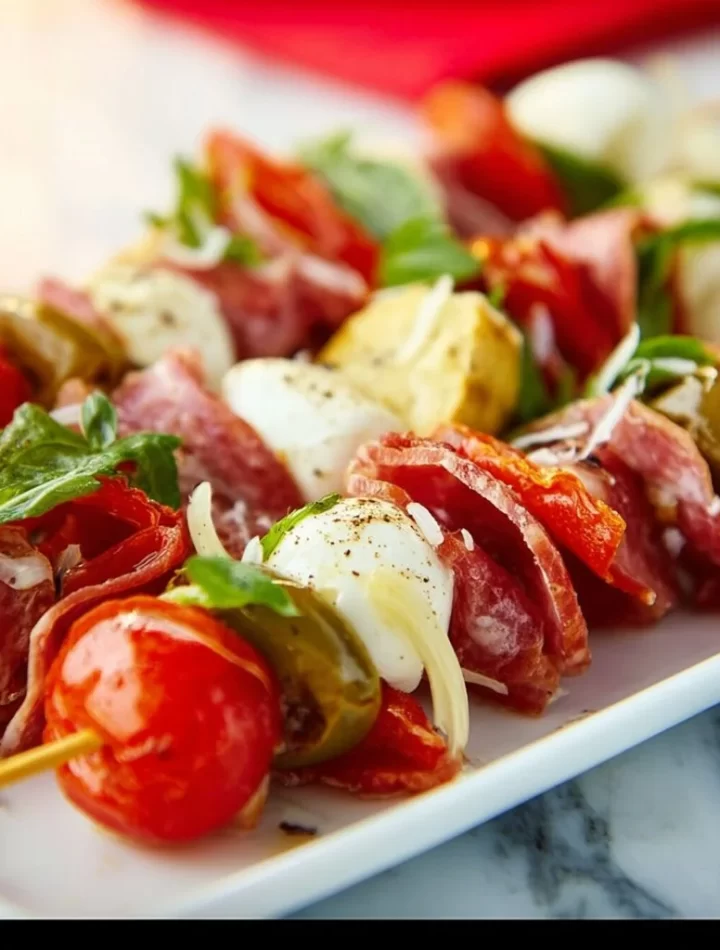
What I love most about antipasto skewers is how they turn a simple ingredient list into something playful. One skewer is a miniature story: a salty olive, a fold of prosciutto, a cube of sharp cheese, a roasted pepper for drama. Put them all together, drizzle with a bright vinaigrette, and suddenly you’ve got an appetizer that makes people smile before they even take a bite. They’re also ridiculously forgiving. Swap, skip, or double up on ingredients to suit dietary needs or pantry finds. Need a vegetarian option? No problem. Gluten-free? Already good to go.
In this post, I’ll walk you through my go-to antipasto skewer recipe step-by-step, share a little kitchen nostalgia, give you substitution tips, plating ideas, and a handful of fun variations that take these skewers from classic to unexpected. You’ll get chef hacks for efficiency (and for cleaning up like a pro), plus troubleshooting for the little things that can trip people up—like soggy basil or skewers that look a bit lopsided.
If you love snackable, shareable food with maximum flavor and minimal fuss, stay right here. We’re threading together perfect bites, and I promise it’ll be faster than you think. Grab your skewers, cue the playlist, and let’s make something delicious that gets passed around the table and talked about long after the plates are empty.
Personal Story
My very first memory of antipasto skewers involves three things: a summer church picnic, a bright plastic tray, and my Aunt Rosa’s determined hands. She had this habit of making a giant tray of things she loved—marinated mushrooms, sticky sweet peppers, big olives—and then improvising tiny tapas by poking everything onto toothpicks. I watched kids and grown-ups alike stroll by, grab a skewer, and grin as if they’d discovered a cheat code for happiness.
One summer I tried copying her at home for a book club night. I was 23, newly graduated from culinary school, and very proud of my neatly folded prosciutto. I overcomplicated things—too many sauces, overly smoky salami—and ended up with a messy platter but a living-room full of happy, slightly tipsy friends. It taught me that antipasto skewers aren’t about perfection; they’re about balance and joy. I still keep a small jar of Aunt Rosa’s olive mix in the pantry and fold her spirit into every batch of skewers I make. Those tiny bites transported me back to simpler times while giving me a blueprint for sharing food that feels effortless and deliberate all at once.
Ingredients
- Cherry tomatoes (about 12–16): Choose firm, bright ones. They add juicy pop and color. Substitution: halved grape tomatoes or even a quick oven-roasted tomato if you want extra sweetness.
- Mini mozzarella balls (bocconcini), drained (12–16): Creamy and mild, they pair beautifully with basil and prosciutto. Tip: If you can’t find bocconcini, cube a mellow mozzarella or burrata (use small spoonfuls).
- Salami slices or prosciutto (6–8 slices, folded): Gives that savory cured-meat punch. Insight: For an elegant skewer, tear prosciutto into ribbons; for a sturdier skewer, roll salami slices.
- Marinated artichoke hearts (6–8 quarters): Tender, tangy, and full of flavor. Sub: plain canned artichokes seasoned with lemon and oregano.
- Roasted red peppers, sliced into strips (6–8 slices): Sweet and smoky, they brighten the skewer. Tip: Use jarred roasted peppers for ease—just drain them well.
- Castelvetrano or Kalamata olives (12–16): Briny contrast—Castelvetrano are buttery and mild, Kalamata bring more pronounced tang. Choose your mood.
- Pickled pepperoncini or cornichons (6–8): Add a vinegary zip that cuts richness. Swap with pickled red onions for flashier color.
- Fresh basil leaves (12–16): Aromatic herb lift. Chef insight: Tuck a leaf under the mozzarella to keep it from sliding on the skewer.
- Cured cheese cubes (such as aged provolone, cheddar, or Asiago) (12–16 cubes): Adds texture and a savory backbone. Substitute with halloumi cubes tossed and lightly grilled for a chewy bite.
- Extra-virgin olive oil and balsamic glaze (for drizzling): Olive oil adds silk; balsamic glaze gives a concentrated sweet-tang finishing kiss. Use quality but don’t overthink it.
- Freshly ground black pepper and flaky sea salt (to finish): Simple seasoning makes everything sing. Tip: Add salt only after assembling if using briny olives to avoid over-salting.
Step-by-Step Instructions
- Prep your station (hack: mise en place is your friend)
- Lay out all ingredients in small bowls so you can grab them quickly. Threading goes so much faster when everything is within reach. I also like to line a tray with parchment for easy cleanup.
- Tip: If you’re prepping for a party, set up an assembly line—cheese near cheese, meats together—so anyone helping you can stay organized.
- Drain and pat dry wet ingredients
- Give mozzarella, roasted peppers, and marinated artichokes a gentle pat with a paper towel. Excess moisture can make skewers slippery and weaken the flavor punch.
- Chef hack: Place olives in a fine sieve and shake off liquid; it saves an annoying olive-drip during assembly.
- Decide your skewer order
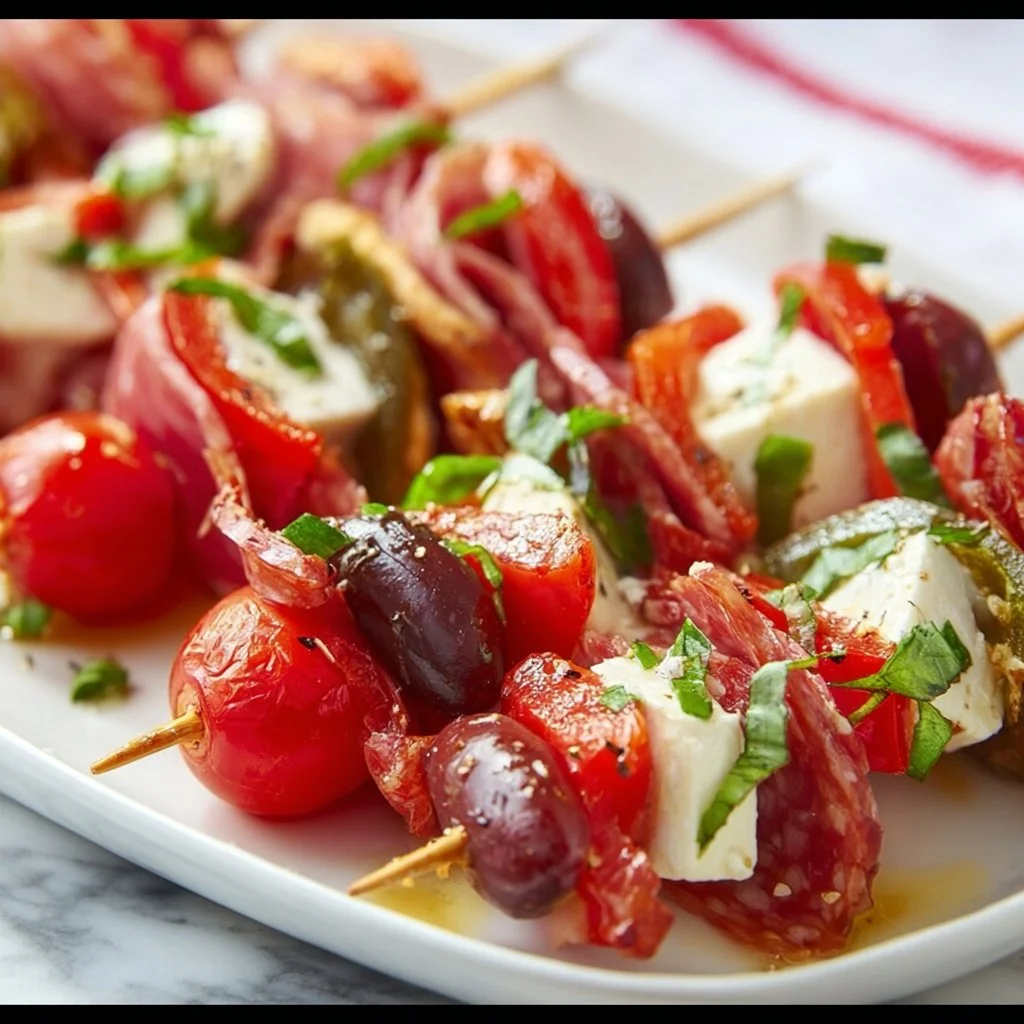
- Think visually: alternate colors and textures. A reliable order I love: tomato, mozzarella (with basil tucked beneath), salami or prosciutto ribbon, olive, roasted pepper, then a cube of cheese or artichoke. Repeat if using longer skewers.
- Tip: Keep heavier items (cheese cubes, folded meat) toward the bottom of the skewer so they don’t topple the lighter items.
- Thread with care
- Use bamboo skewers or pretty cocktail picks. Start with the tomato and skew lengthwise so the round tomato sits snugly. Follow with mozzarella and basil, folding the basil to fit beneath the cheese so it anchors.
- Chef insight: If you’re using prosciutto, fold it into a loose ribbon and twirl it before skewering—this keeps it airy and pretty. For salami, a small roll creates a tidy, compact bite.
- Balance the flavors
- Alternate salty and sweet items. If you’ve got a very salty olive variety, pair it with a sweeter roasted pepper or a fresh tomato to keep the balance bright.
- Hack: Taste a quick combo before you assemble all skewers—tomato + mozzarella + olive—so you can adjust pickles or dressing quantities before guests arrive.
- Keep them taut but not squashed
- Push items close enough to hold together but not so tightly that tomatoes burst or mozzarella loses shape. Visual appeal matters—give each component a little breathing room so it looks intentional.
- Dress just before serving
- Drizzle with extra-virgin olive oil and a light balsamic glaze right before guests dig in. A sprinkle of flaky sea salt and fresh cracked pepper completes the profile.
- Chef tip: If you drizzle too early, the balsamic can soak into breads or make things soggy. Hold off until the last minute.
- Chill or serve at room temp
- If you’re making these ahead, assemble and refrigerate covered for up to 3 hours. Pull them out 15 minutes before serving to allow flavors to bloom. If one component (like burrata) is very soft, assemble at the last minute to preserve texture.
- Presentation final touches
- Scatter extra basil leaves, lemon zest, or a few whole olives on the serving platter. A sprinkle of toasted pine nuts adds crunch and a lovely nutty aroma.
- Bonus hack: If you want to add a smoky note, quickly grill the assembled skewers for 30–45 seconds per side on a hot grill—just long enough to get char marks without melting the mozzarella.
Serving Suggestions
Plating antipasto skewers is half the fun. Treat them like tiny gifts: arrange them in neat rows on a long wooden board or fan them out in concentric circles on a large platter for obvious party theater. Here are a few styling ideas to elevate your presentation:
- Family-style board: Lay skewers across a long charcuterie board with small bowls of pesto, honey mustard, or spicy arrabbiata in between. Guests can add an extra dollop if they like.
- Single-serving display: Place two or three skewers atop little squares of rustic bread or crostini, drizzle lightly, and serve as a composed appetizer for a sit-down dinner. It feels fancy with minimal effort.
- Picnic-ready jars: Stand skewers upright in short mason jars lined with arugula leaves for a portable, Instagram-friendly option. Cover with beeswax wrap until ready to serve.
- Seasonal pairings: In summer, pair with chilled prosecco or a citrusy Aperol spritz. In cooler months, serve with a full-bodied red like Chianti or a herbal G&T to cut through the richness.
Also think about texture contrast on the plate—add a small pile of crunchy breadsticks or rosemary crackers so guests can alternate bites. Garnish with flaky sea salt, a dusting of cracked pepper, or a few fresh herb sprigs (like oregano or thyme) for aromatic flair. Lighting helps too—soft overhead bulbs or candles make these little skewers feel cozy and special.
Recipe Variations
One of the best things about antipasto skewers is their adaptability. Here are 5 simple ways to switch up the flavor profile and cater to different diets or tastes:
- Vegetarian Deluxe
- Swap meats for marinated mushrooms, grilled zucchini ribbons, and roasted baby beets. Add a cube of smoked mozzarella or halloumi for a savory bite. This keeps the texture variety while staying meat-free.
- Mediterranean Seafood Twist
- Replace cured meats with smoked salmon or marinated shrimp. Combine with dill, lemon zest, and a tzatziki drizzle for a seaside vibe. Shrimp skewers look beautiful and add protein without heaviness.
- Vegan-Friendly Skewers
- Use vegan cheese or marinated tofu cubes, pickled vegetables, and sun-dried tomatoes. Oil-packed artichokes and kalamata olives keep the richness. Finish with a lemon-herb vinaigrette to brighten.
- Sweet-and-Spicy
- Add candied figs or fresh strawberry halves paired with peppery salami and a drizzle of honey-chili syrup. This plays on sweet and heat for an adventurous bite.
- Smoky Grill Finish
- Assemble skewers with halloumi, chorizo (or a smoky vegan chorizo), and charred corn kernels, then grill quickly to add char and warmth. Finish with smoked paprika and a squeeze of lime.
Try mixing themes for holidays—swap in red and green elements for festive occasions, or go monochrome with all-white mozzarella, pearl onions, and blanched cauliflower for a modern party look.
Chef’s Notes
Over the years, this recipe has become my go-to for everything from big family showers to weeknight movie snacks. One piece of advice I keep repeating: keep it simple. The most memorable skewers are those where each component is allowed to shine rather than competing with fifty condiments. Also, invest in a good olive—its briny personality often sets the tone for the whole skewer.
A funny kitchen story: once I made a giant batch for a summer block party and forgot to label which skewers were vegetarian. Kids enthusiastically picked the meat ones and left the vegetarian ones intact—until a tiny neighbor named Max announced, “This one tastes like pizza!” and scarfed down three in a row. It was a win for creativity over categorization.
Lastly, if you’re ever stressed about presentation, remember this: people eat with their eyes and their hands. A little color contrast, a quick drizzle, and a clean platter makes these feel intentional, and that’s half the joy.
FAQs and Troubleshooting
Q: My basil turns black quickly—how can I prevent that?
- Basil blackening happens from bruising or exposure to cold. Tuck whole basil leaves under cheese or tomato to protect them, and add fresh basil right before serving. Avoid refrigerating basil directly on the skewers; store leaves separately and assemble last minute.
Q: The mozzarella keeps sliding on the skewer—what’s the trick?
- Place a basil leaf or a small piece of folded prosciutto under the mozzarella to create friction. Alternatively, halve the mozzarella and thread it cut-side down so it sits more securely.
Q: How far ahead can I assemble these?
- You can assemble and refrigerate for up to 3 hours. If you need to prep earlier, keep components separate and assemble within an hour of serving. Dress the skewers only right before serving to prevent sogginess.
Q: My skewers look uneven—any tips for making them uniform?
- Use consistent-sized bites: choose small mozzarella balls, cut cheese into similar cubes, and fold meats to similar dimensions. Use the same number of items per skewer and place heavier components at the bottom.
Nutritional Info
Antipasto skewers are versatile in nutrition because they depend entirely on the ingredients you choose. Here’s a general breakdown for a classic skewer (one skewer = 1 cherry tomato, 1 bocconcini ball, 1 folded salami slice, 1 olive, 1 roasted pepper strip, 1 small artichoke quarter, 1 cube of cheese):
- Calories: approximately 90–140 calories per skewer (varies widely based on cheese and meat choices)
- Protein: 4–7 grams (from cheese and cured meats)
- Fat: 6–10 grams (primarily from olive oil, cheese, and cured meats; mostly monounsaturated if using olive oil and Castelvetrano olives)
- Carbohydrates: 1–3 grams (mostly from vegetables)
- Fiber: 0.5–1.5 grams (from veggies and olives)
- Sodium: can be high depending on cured meats and olives, so balance with lower-sodium components (fresh veggies, unsalted cheese) if watching salt intake
Tips to make them lighter or fit dietary goals:
- Lower-sodium: choose low-sodium olives and reduced-sodium cured meats, or use more vegetables and less cured meat.
- Lower-fat: swap regular mozzarella with part-skim or choose leaner proteins like grilled shrimp.
- Higher-protein: add extra cheese cubes or swap in smoky tempeh or grilled chicken bites.
- Keto-friendly: skip starchy crackers and stick with meats, cheeses, and olives; drizzle with olive oil for healthy fats.
Final Thoughts
Antipasto skewers are the kind of recipe I return to again and again because they invite creativity and community. They’re quick enough for weeknight fun and pretty enough for a special occasion. Most importantly, they remind us that the best food moments are simple: a stack of friends, a shared board, laughter, and the little ritual of reaching for the next perfect bite.
So next time you’re scrambling for an appetizer or want to add something fresh to your entertaining rotation, give these skewers a try. Assemble them with care, not stress—let the ingredients speak. And if you end up improvising—extra olives here, a surprise roasted grape there—consider that part of the magic. Food tastes better when it’s made with a little love and a lot of personality.
Conclusion
If you want more inspiration or a slightly different take on this idea, check out this terrific resource for more Antipasto Skewers inspiration: Antipasto Skewers – Baker by Nature. Happy skewering—and don’t forget to text me a photo of your board. I love seeing what you create!
Print
Antipasto Skewers
- Total Time: 15 minutes
- Yield: 4 servings 1x
- Diet: Vegetarian
Description
These colorful and customizable antipasto skewers are the perfect appetizer, combining a delightful mix of cured meats, cheeses, and fresh vegetables.
Ingredients
- 12–16 Cherry tomatoes
- 12–16 Mini mozzarella balls (bocconcini), drained
- 6–8 slices of Salami or Prosciutto, folded
- 6–8 quarters of Marinated artichoke hearts
- 6–8 slices of Roasted red peppers
- 12–16 Castelvetrano or Kalamata olives
- 6–8 Pickled pepperoncini or cornichons
- 12–16 Fresh basil leaves
- 12–16 cubes of Cured cheese (e.g., aged provolone, cheddar, or Asiago)
- Extra-virgin olive oil and balsamic glaze (for drizzling)
- Freshly ground black pepper and flaky sea salt (to finish)
Instructions
- Prep your station by laying out all ingredients in small bowls for easy accessibility.
- Drain and pat dry all wet ingredients to avoid slippery skewers.
- Decide your skewer order; a reliable sequence is tomato, mozzarella (with basil), salami or prosciutto, olive, roasted pepper, and cheese or artichoke.
- Thread the ingredients carefully onto skewers, starting with the tomato and ensuring they sit snugly.
- Balance flavors by alternating salty and sweet items throughout the skewer.
- Keep the ingredients taut but not squashed on the skewers for visual appeal.
- Dress the skewers with olive oil and balsamic glaze just before serving.
- Chill or serve at room temperature, assembling just before serving for best texture.
- Finish with presentation touches like extra basil or toasted pine nuts for garnish.
Notes
These skewers are adaptable for various dietary needs and can be customized with different ingredients or serving styles.
- Prep Time: 15 minutes
- Cook Time: 0 minutes
- Category: Appetizer
- Method: No Cooking Required
- Cuisine: Mediterranean
Nutrition
- Serving Size: 1 skewer
- Calories: 120
- Sugar: 3g
- Sodium: 350mg
- Fat: 8g
- Saturated Fat: 2g
- Unsaturated Fat: 5g
- Trans Fat: 0g
- Carbohydrates: 3g
- Fiber: 1g
- Protein: 6g
- Cholesterol: 15mg
Keywords: antipasto, skewers, appetizer, party food, Mediterranean